Impactmaker Jessy Lee Kemmers: ‘We are getting ever closer to a fully circular system for our packaging’
March 25, 2026

Together with growers, we are building a sustainable future in which flowers and plants are grown with respect for people and the environment. Transport packaging also plays a key role in this. Jessy Lee Kemmers, Manager of Product Range & Yields for Transport Packaging, explains the steps Royal FloraHolland is taking in this area.
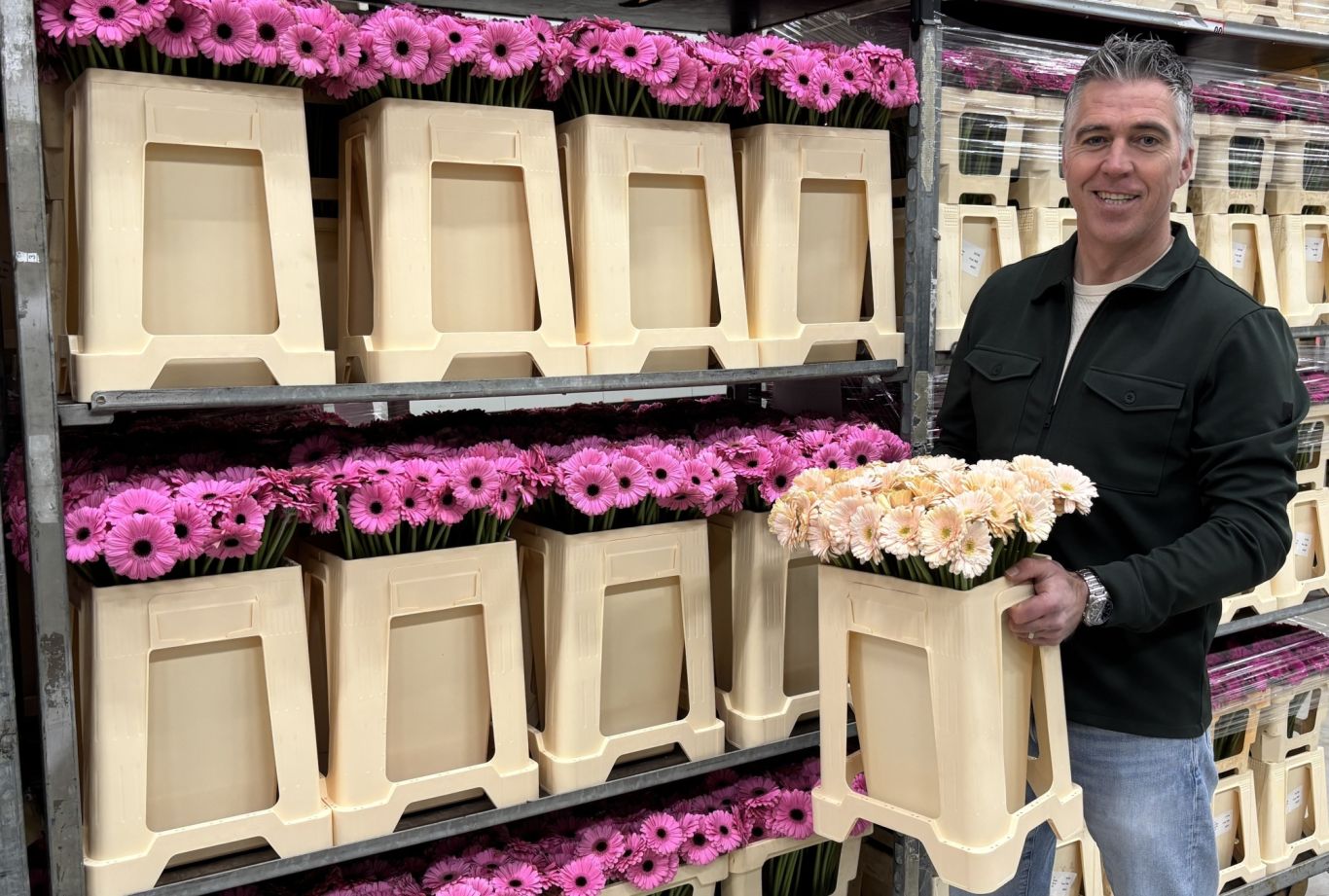
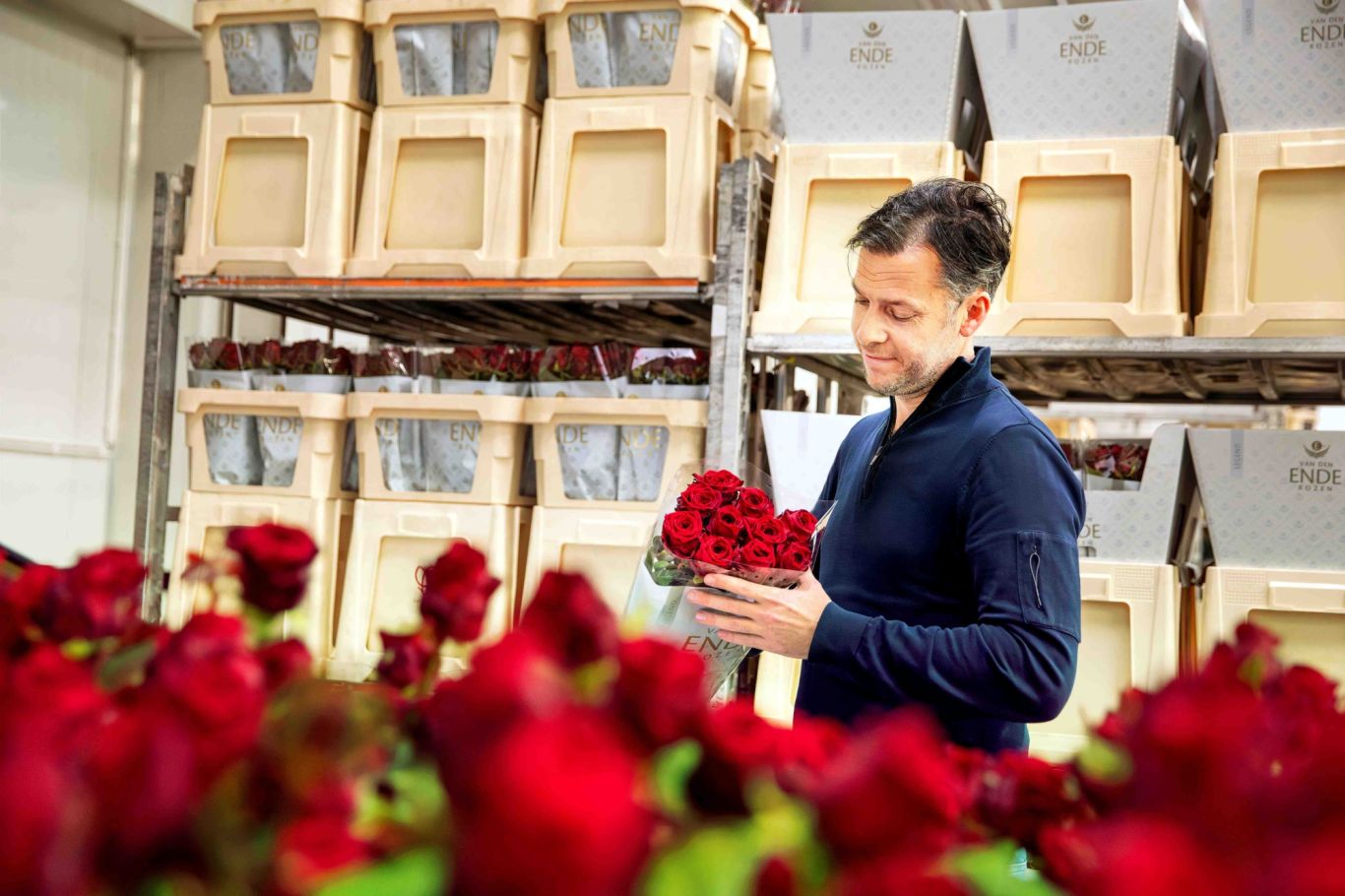
The beige flower buckets – who hasn’t seen them? They can be found in many places where flowers are sold – from market stalls to florists. More than 90% of the flowers we trade through Royal FloraHolland are transported in these buckets. “We’ve been using them since the 1980s,” says Jessy Lee Kemmers. The flower buckets, which are reused multiple times, have lasted so long partly thanks to the deposit system. The grower pays a deposit when collecting the buckets and receives the amount back when they are sold via Royal FloraHolland with flowers inside. The buyer of the flowers then pays a deposit for the packaging and gets this back upon return.
Another important aspect is their robustness. “The flower buckets are almost indestructible; some have been in circulation since 1983,” says Jessy Lee. Attention to maintaining the quality of the buckets also plays a role. “Royal FloraHolland has its own washing facility. Because we clean the buckets thoroughly upon their return, diseases don’t stand a chance and the flowers last longer. If one does break, we use the old bucket as raw material for new ones. Around 20% of a new bucket consists of recycled material. Under the Packaging and Packaging Waste Regulation (PPWR, the EU legislation on packaging and packaging waste as part of the Green Deal, ed.), this must reach 35% by 2030. We are working hard towards this by developing and supporting new initiatives and adapting our IT systems accordingly. We are getting ever closer to a fully circular system for transport packaging.”
Standardisation: efficient and sustainable
Sustainability plays a key role at Royal FloraHolland, including in packaging. Standardisation is crucial in this regard. Because we use the same (base) dimensions for packaging, load carriers such as trolleys and CC containers can be utilised to their full potential. “This leads to a more efficient supply chain,” says Jessy Lee. “Ideally, we would like to reduce the number of transport packaging items even further and standardise them. We are therefore working continuously with growers, buyers, our suppliers and other partners in the chain to make our transport packaging even more sustainable.”
A good example is the recently introduced Fc555 flower bucket. With this new bucket, a single-use cardboard collar or reusable Fc596 support shelving is no longer required. This saves on packaging costs, as well as reducing handling on the farm, at the buyer’s premises and further down the supply chain. “This enables us to achieve a reduction of 250,000 kilos of cardboard per year. And that’s just for the barberton daisy product group, which will start using this new bucket in the spring of 2026. Imagine the savings when other product groups start using this new bucket later on.”
Not imposing, but collaborating
According to Jessy Lee, growers and buyers are open to sustainability. “But it is important that we at Royal FloraHolland properly identify their needs. If we impose something from above that does not align with market needs, such an initiative is doomed to fail. We need to tackle sustainability together. Sometimes we are compelled to do so by legislation, such as the PPWR. That can help get growers and buyers on board. But ideally, we want to stay ahead of the legislation and become more sustainable out of intrinsic motivation. Whilst, of course, it must also be commercially viable for businesses.”
It is difficult to replace single-use plant trays with reusable ones. One drawback of reusable plant trays, for example, is that consumers shouldn’t really be taking them home. It then takes too long before they can be reused, meaning that too many reusable trays are actually needed. “And it’s also questionable whether it’s really more sustainable, if you factor in all the extra transport movements. At Royal Flora Holland, we want to play a leading role in sustainable solutions. That’s why we’re also collaborating on the Euro Plant Tray.” This is an initiative focusing on reusable plant trays, involving lots from every link in the European floriculture chain.
Share your sustainable initiative!
Jessy Lee concludes with an appeal to all parties in the floriculture sector: “Do you have an interesting initiative in the field of sustainability combined with transport packaging? Come and talk to us! We are open to collaborations and initiatives that make the sector more sustainable and help it move forward. We are happy to work alongside growers and buyers on this. The same applies to the PPWR regulations. We are happy to help you navigate the jungle of new laws and regulations. For example, in collaboration with VGB (Association of Wholesalers in Floricultural Products), we’ve created a website with everything you need to know about PPWR in the context of floriculture. So that together we can make the sector more sustainable in the right way and make a real impact.”
More information about the PPWR
The Packaging and Packaging Waste Regulation (PPWR) is a European law designed to drastically reduce packaging waste in the European Union. In the floriculture chain, this requires a clear division of roles, improved data flows, and more sustainable packaging choices. The VGB and Royal FloraHolland are working together to represent the interests of growers and buyers. Read here to find out what this means for you.
Impactmakers is a series by Royal FloraHolland in which we give a voice to entrepreneurs who are making the sector more sustainable with vision and courage. From major steps to small improvements: together we are building a future in which flowers and plants are grown with respect for people and the environment. Read all the stories of our impactmakers here.
-
Did you find this interesting?
Then share this article
-
Related articles