Management update: January
January 27, 2026
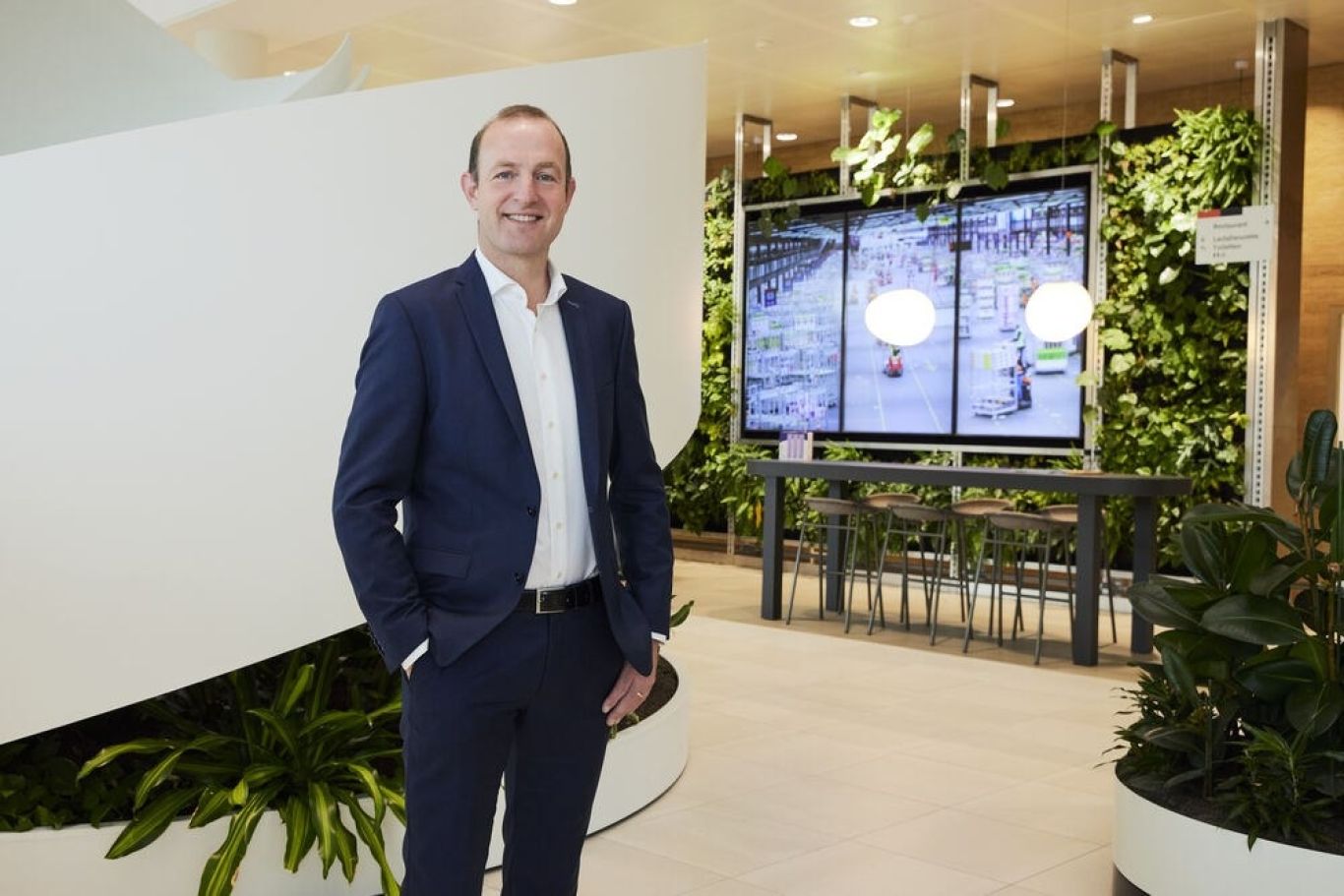
In this first update of the year, our interim CEO, David van Mechelen, looks back on the past month and ahead to the future on behalf of the Royal FloraHolland (RFH) management team.
The new year got off to a fresh, cold start, both literally and figuratively. January brought us not only snow, but also lower volumes and figures for flowers and plants. Nevertheless, we are looking ahead with confidence. We are currently working hard on the 2025 year-end closing. The good news I can already share is that we are closing last year in the black. This is a result to be proud of, especially given the challenging circumstances of the past year.
This forms a solid foundation for our future. In the coming years, we will continue to invest to ensure the continuity of RFH. In 2026, we will continue to focus on staying in the black so that we can continue these investments and further strengthen our position.
Response to NVWA report
Last week, we noted the BuRO report published by the NVWA on crop protection products for roses that may have been imported from countries outside the EU. RFH takes this report seriously and, as a cooperative of national and international growers, has long been committed to transparency, measurability, and the safety of flowers and plants throughout the supply chain. Together with partners in the chain, we have responded to this report on ontdeksierteelt.nl.
This website is definitely worth a look. After all, the basic principle of crop protection products is clear: flowers and plants must be safe for people, animals and the environment everywhere in the world. At the same time, it is difficult for different countries to have different legal regulations and various pests, which means that different crop protection products may be used. At RFH, we are therefore also committed to international standards, such as certification under the FSI's “Basket of Standards”. This allows us to present facts and data from growers.
Integrated Pest Management is also part of this and ensures that chemical agents are only used as a last resort. The results speak for themselves: since 2015, the use of the most environmentally harmful agents has fallen by tens of per cent worldwide. Together, we will continue to work towards a sustainable, transparent and innovative sector in which consumers can enjoy flowers with peace of mind, and employees can do their work safely.
Employee survey
A highlight this month: participation in our annual employee survey rose from 70 to 85 per cent. That is a wonderful development. It shows that colleagues are committed and want to contribute to a working environment in which we collaborate with pride and energy. I want to thank everyone for participating. This is vital information for us, based on which we can implement further improvements within the organisation. In addition, the RFH-wide enthusiasm score was also excellent: 7.5. We will communicate more extensively about the results shortly.
Tulip Day
On 17 January, the Museumplein in Amsterdam was once again festively decorated in red, yellow and pink during Tulip Day. With 200,000 tulips in a picking garden, we celebrated the start of the tulip season. This year, there was extra attention to sustainability: visitors could use QR codes to learn more about the responsible Dutch tulip cultivation.
Tulip Promotion Netherlands (TPN) also conducted research into crop protection residues on tulips in collaboration with an independent research agency—another significant step towards even greater transparency.
Preparing for Valentine's Day & Mother's Day
Valentine's Day and Mother's Day are just around the corner, moments that are of great significance to our sector. On these days, hundreds of thousands of Dutch people choose flowers to show their love. Flowers are the ultimate symbol of connection and emotion, and this year RFH wants to emphasise that feeling publicly. That is why RFH is working on a media campaign that highlights growers' love of flowers in the Netherlands, Germany, France, and England. This will also be rolled out in Kenya and Belgium, among other countries, with an emphasis on the love of flowers from every grower. This is in line with who we are as a cooperative: close to the source, close to the people who grow with passion every day. You will hear more about this soon.
The campaign is a counterpoint to the critical voices that are unfortunately often heard in the media at this time of year. Despite the significant steps we have taken together, such as the substantial reduction in the use of environmentally harmful substances, this is sometimes exaggerated. We anticipate this in our communication, which is based on facts and transparency, but also by focusing on sympathy and empathy. Because it is precisely on days like these that we want to show what we stand for: a sustainable, safe and innovative floriculture sector in which consumers can enjoy flowers with peace of mind.
Closure of the Rijnsburg auction room
Following Aalsmeer and Naaldwijk, the auction room in Rijnsburg has now also closed. This means that we no longer have any auction rooms at any of the three hubs. From a historical perspective, this is a significant step and change for RFH. Traditional auctions are increasingly being replaced by digital purchasing.
Since 11 December, new purchasing workstations have been available for buyers in Rijnsburg. Research shows that buyers still need an on-site shared workspace. The new purchasing workstation in Rijnsburg fits in perfectly with this. It is a good example of how we invest in future-proof infrastructure while taking our customers' wishes and interests into account.
Root knot nematode infections
Recently, several growers have been severely affected by root-knot nematode infestations. This has had a profound impact: years of craftsmanship, dedication and investment have suddenly come under pressure. Our hearts go out to everyone affected by this. It shows once again how crucial prevention is. Meloidogyne enterolobii has EU quarantine status; therefore, zero tolerance applies when it is found, and infected material must be destroyed. Because there is no proven curative treatment, strict hygiene and working with clean starting material are the only realistic options. As a sector, we are in close contact with the NVWA and industry partners and are following the established protocols. Together with the parties involved, we are also investigating whether there are alternatives to complete clearance in specific situations. In this way, we aim to minimise the impact on our growers while still ensuring safety.
FloraMondo shutdown & farewell to the electronic delivery form
We are continuing to develop our digital channels. Since 24 December, Auction Presales have been running entirely via Floriday and FloraMondo has been shut down. We are also saying goodbye to the electronic delivery form (EAB). From now on, all growers can supply via the clock through Floriday, an essential step in our digital transformation. This is not only a technical change, but also a cultural change. Together, we are preparing the sector for the future. By discontinuing FloraMondo, we are simplifying our IT landscape and making it more future-proof. This not only provides greater clarity and efficiency, but also cost savings.
Flora Spring Expo
On 18 and 19 March, we are organising the first Flora Spring Expo on our outdoor grounds in Aalsmeer-Oost. In four large aluminium halls, we will bring growers, traders and (international) customers together to gain inspiration, share knowledge and kick off the spring season together. It is more than just a trade fair: it is a moment of connection and renewal for our sector. Registration for exhibitors is open until 19 February, an excellent opportunity to be visible and start the spring together.
-
Did you find this interesting?
Then share this article
-
Related articles