Peak in terms of figures: a look back at the spring peak of 2026
June 17, 2026
The peak period in 2026 was shorter than in 2025. This year, Mother’s Day in England fell two weeks earlier and came immediately after International Women’s Day. Easter and Whitsun also fell two weeks earlier than last year. Furthermore, after Easter there was a relatively long gap until the next major peak day.
King’s Day also had an impact on the peak period this year. The public holiday fell on a Monday, meaning there was no auction. This put extra pressure on the following Tuesday: the busiest working day of the week. We therefore organised an extra early auction day after King’s Day. This was necessary, particularly following a non-auctioning day on the preceding Monday.
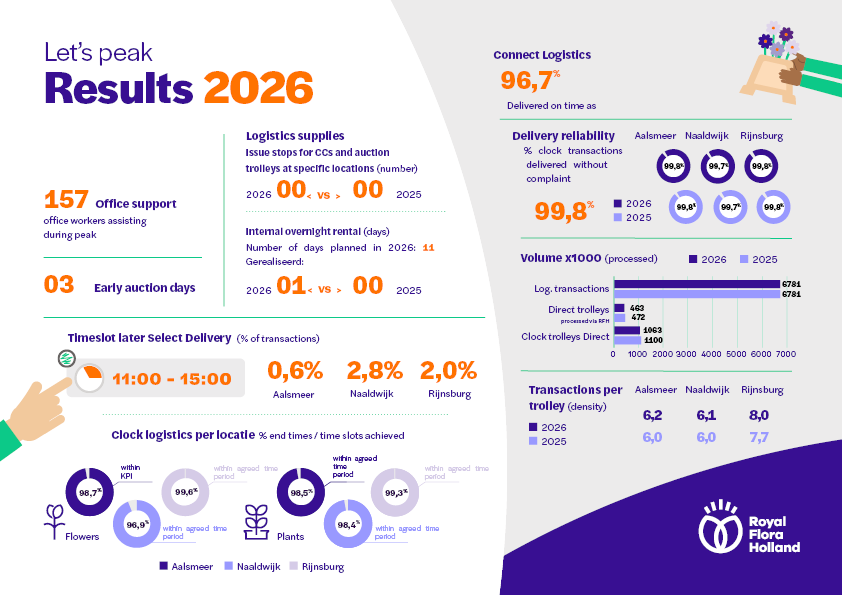
From mid-April onwards, supply at the auction during this period was 4.9% lower than last year. This partly explains the 7.0% improvement in pricing at the auction. Over the entire peak period, Royal FloraHolland – combining auction and direct sales – traded 0.8% fewer units than last year. Pricing was 3.0% higher. On 26 May, an all-time record was set for the number of flower transactions in Aalsmeer.
Fewer auction trolleys, more finely-grained orders
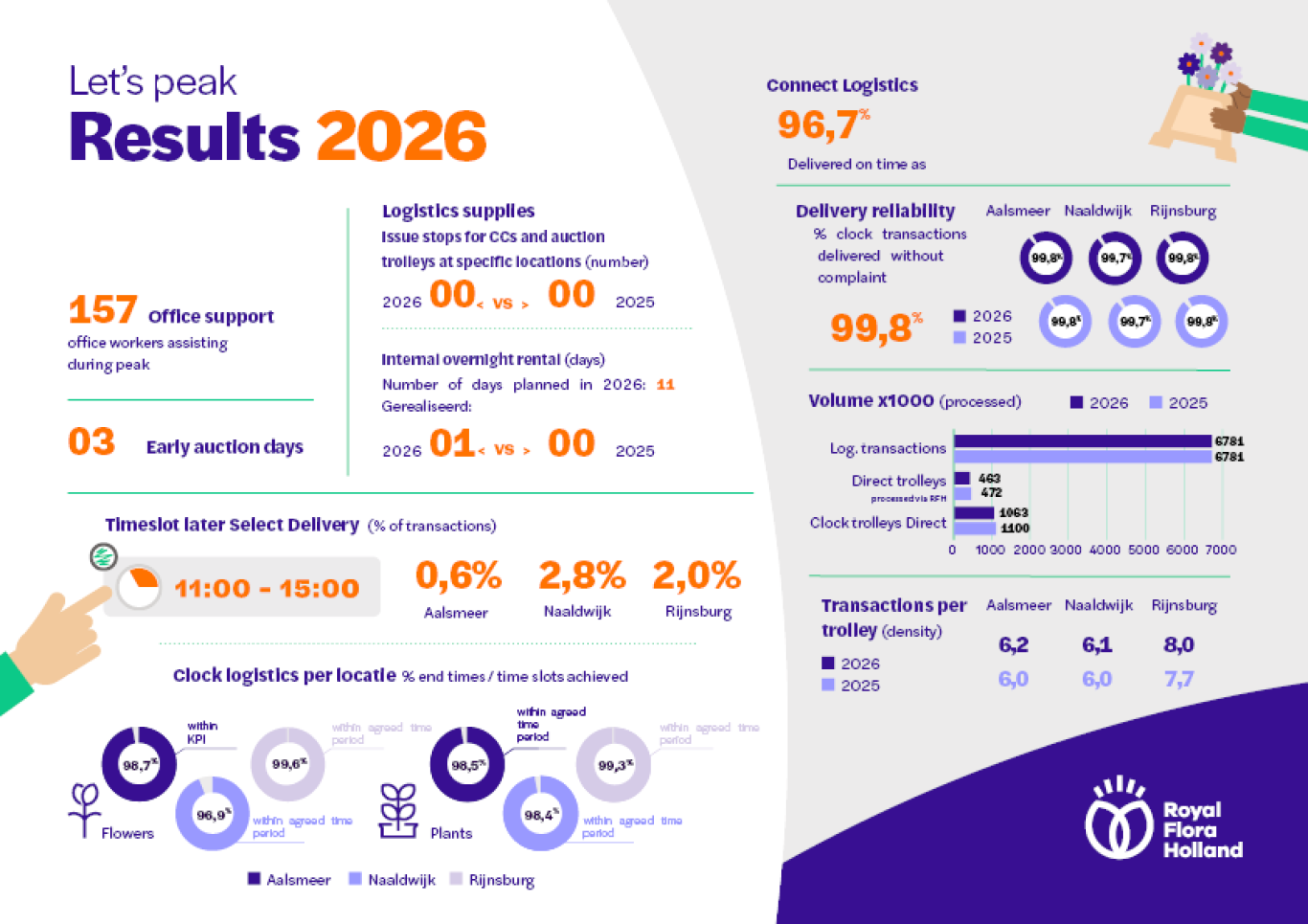
The number of auction trolleys we handled during the 2026 peak was more than 3% lower than during the 2025 peak. At the same time, the level of detail increased, particularly on peak days. We handled more transactions per trolley, which meant that the number of clock sales ultimately remained at the same level as during the 2025 peak. Splitting up the trolleys on arrival presented additional challenges during the peak days, due to the increased level of detail and the maximum number of staff available for trolley handling and transaction handling.
Impact on buyers
RFH realises that later finishing times in our process and later deliveries have an impact on buyers’ operations. This includes additional pressure to ensure transporters depart on time. That is why RFH monitors delivery reliability and endeavours to predict finishing times per hub as accurately as possible. Continuously scrutinising and improving our logistics process is always important, and certainly during the peak period. We are aware of this and therefore regret it if buyers experience disruption due to later delivery orders.
The following went well:
RFH noted the following positive aspects during this spring peak period:
- Pricing developed positively. Over the peak periods, we traded 0.8% fewer items in total (combining auction and direct sales), whilst prices were 3.0% higher. At the auction, supply was 4.9% lower from mid-April onwards, which partly explains the 7.0% price increase.
- Delivery reliability was high: 99.8% of transactions were delivered correctly without any complaints
- The availability of logistic means was good, such as packaging, CCs and empty trolley trolleys.
- The additional early auction days proved valuable. The extra early auction day following King’s Day was necessary for effective handling of the high volume of produce following a non-auctioning day.
- The two additional early auction days in May helped to spread demand more evenly and ensure buyers were supplied on time as far as possible.
Areas for improvement:
RFH has identified a number of areas for attention:
- The shift in supply to Aalsmeer placed additional pressure on the logistical capacity at this hub. Combined with the increased demand for fine-mesh distribution, this led to less predictable deliveries on peak days.
- In addition, there were two days in March with serious disruptions. In April, the timeliness of deliveries from Aalsmeer was lower during the logistical disruption on the day after King’s Day.
- Predicting the workload and finishing times on peak days remains a key area for attention, and we will take this into account for the rest of the year as well as during the next spring peak.
-
Did you find this interesting?
Then share this article
-
Related articles