Marcel van der Lugt on influence, trust and the future of the Members' Council
August 20, 2026
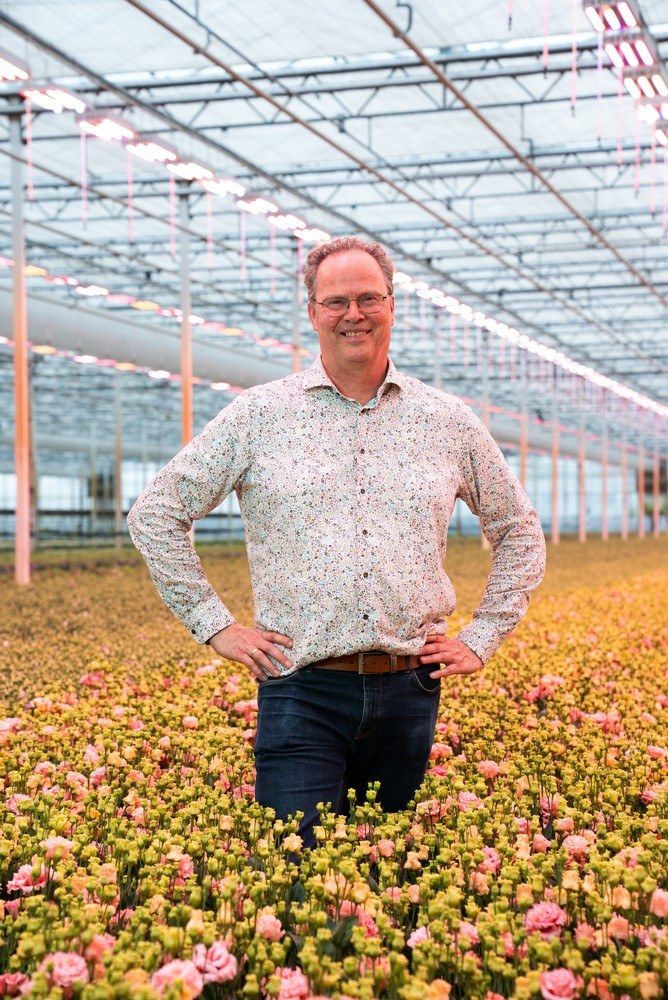
A year and a half ago, Marcel van der Lugt became chair of Royal FloraHolland’s Members' Council. He is now halfway through his three-year term. This is a good time to look back at the development of the Members' Council, the collaboration with the executive board and the supervisory board, and the issues currently on the agenda. But above all, it is a time to look ahead: what does he still want to achieve in the coming year and a half?
From operational to strategic
When Marcel took up the chairmanship, he had a clear ambition: to further professionalise the Members' Council and give it a stronger position within the cooperative. In his view, significant progress has been made in this regard. “In the past, the focus was more often on operational matters. Of course, these are topics that are important to members, but as the Members' Council we must also look at the strategic future of the cooperative. That is precisely where we have made great strides.” These days, the Members' Council is playing a more active role in discussions on topics that will shape the future of Royal FloraHolland, such as the hub strategy, the digital clock and the revised tariff system.
In addition, Marcel has noticed that collaboration within the Members' Council itself has changed. “We’ve started speaking with a much more unified voice. That doesn’t mean everyone always agrees, but it does mean that we discuss matters amongst ourselves before taking a position with the executive board. If we, as the Members' Council, say five different things, everyone can pick out what suits them best. That means you have less impact.”
According to Marcel, this approach has ensured that the Members' Council is taken more seriously. “We’re being consulted more and our views are being listened to more. That was one of my goals when I started.”
Surprised by the openness
One of the biggest surprises of his chairmanship for Marcel was the collaboration with the executive board and the Supervisory Board.
“They really do listen to us. That doesn’t mean we always agree, but you can give your input and it’s taken seriously.”
As an example, he cites the discussions on certification, a topic that has caused quite a stir among growers in recent years.
“We’ve had some quite robust discussions about that. It’s precisely then that you realise how important it is for the Members' Council to be at the table. You don’t have to agree on everything, but you do need to be able to influence the decisions being made.”
In his view, that influence lies not only in offering advice, but also in keeping the discussion focused.
“We have become clearer in our communication with the executive board, and as a result, the executive board has also become clearer in its communication with us.”
Staying in touch with what matters to members
According to Marcel, effective representation starts with knowing what is going on amongst members. And that, he believes, is precisely where an important challenge still lies: Royal FloraHolland has around 3,000 members, but relatively few actively seek contact with the Members' Council. “That sometimes surprises me. I certainly don’t get calls every day. Yet I think: if something is going on, please let us know.”
That is why the Members’ Council is increasingly focusing on dialogue with members through canteen sessions, member sessions and discussions with growers at the various locations. “You don’t build trust in just one or two years. You have to show that you’re there for the members, that you share their interests and that you’re simply an entrepreneur yourself.” According to Marcel, the Members' Council also plays an important role as a facilitator and interpreter. “Sometimes people worry about something that’s actually quite easy to explain. But that does require us to be in dialogue with one another. If that dialogue is missing, assumptions and misunderstandings quickly arise.”
“It’s always a good thing when members come to us. That way, we have a better understanding of what’s going on and can explain more clearly why certain decisions are made and what influence the Members' Council has on them.”
The major issues at present
The Members' Council is currently addressing a number of key issues that directly affect the future of the cooperative.
One of these is the hub strategy, which examines the future of Royal FloraHolland’s various logistics hubs.
“Members understandably have questions about this. What does this mean for my Location? What does this mean for logistics? We pass on these concerns and ensure they are taken into account in the discussion.” The Members' Council is also actively involved in discussions regarding the digital clock. “The roll-out itself has to happen, but we are primarily looking at the impact on members. If a grower calls us with questions, we need to know what’s going on.”
In addition, the Members' Council played a key role in the development of the revised fee structure. “We have consistently looked at where the pain points lie for members. What makes sense, what can be explained, and where do we need to make adjustments? They really listened to that. I expect the result to be a balanced solution for keeping the cooperative affordable.”
“Above all, it’s about keeping the organisation united. If members drop out, everyone ends up being weaker.”
A strong cooperative starts with trust
During the conversation, Marcel returns to the same theme several times: trust. According to him, people sometimes forget that Royal FloraHolland ultimately belongs to the members themselves. “When I became chairman, I regularly heard people say: ‘The company is just doing whatever it likes.’ But ultimately, it is our company. The people who work there are doing their best to serve the members as well as possible.”
In his view, this also requires something from the members themselves. “We can only expect the right decisions to be made if we, too, send out the right signals. That is a responsibility we share.”
“We can only get the best out of the market if we provide each other with the right information. That works both ways.”
Looking ahead: even more visible and stronger
Although Marcel looks back on the past year and a half with satisfaction, he sees the current phase primarily as an intermediate step. In the coming period, he wants to continue building a Members' Council that operates even more professionally, has an even better understanding of what is going on amongst members, and assumes its role within the cooperative even more firmly.
An important tool in this regard is an evaluation carried out within the Members' Council. This assesses what knowledge and qualities are present and where there are still opportunities for development.
“The process of professionalisation isn’t complete. We’ve made good progress, but we can still improve. We want to be even clearer in our communication with the company whilst, at the same time, staying even more closely attuned to what matters to our members.”
For Marcel, the biggest challenge lies outside the meeting room. “There are around 3,000 members, with wide variations in the types of businesses they run. This means maintaining a connection with the entire membership requires constant attention. We intend to focus even more on this in the coming period.”
“You don’t build trust in one or two years. You have to earn it anew every time.”
A call to members
Finally, Marcel has a clear message for members.
Make your voice heard.
Whether it’s concerns, ideas, opportunities or market developments: the Members' Council needs this input to maintain a clear picture of what’s going on. “The more feedback we receive, the better we can fulfil our role. Ultimately, we are here to represent the members’ voice.”
Marcel also hopes that more members will consider taking an active role within the Members' Council. “In the Members' Council, you really do have influence. But to make the most of that influence, we need committed people who are willing to contribute their thoughts on the future of the cooperative. So sign up for the Members' Council.”
“A strong cooperative doesn’t start in the meeting room. It starts with members who contribute ideas, get involved and make their voices heard.”
-
Did you find this interesting?
Then share this article
-
Related articles