Flower and plant sector has long been committed to transparency and safety based on sustainability in the chain
January 22, 2026
Yesterday, the Dutch floriculture sector took note of the report published by the NVWA from the Risk Assessment & Research Bureau (BuRO) on “crop protection products on potentially imported roses from countries outside the European Union (EU)”. The sector attaches great importance to the protection and health of employees and consumers, takes the recommendations seriously, and is therefore keen to discuss this with the NVWA. For some time now, the sector has been committed to transparency, measurability, and safety based on sustainability throughout the chain. In terms of certification, there is an international sector standard for transparency, the Floriculture Sustainability Initiative (FSI) “Basket of Standards,” which includes environmental standards and clear safety measures for all employees in the chain. The basic principle is the same everywhere in the world: the cultivation of flowers and plants must be effective for people, animals, and the environment.
Health always a priority
For a long time now, there have been regulations in the sector, both at home and abroad, requiring protective clothing to be worn by employees who work intensively with flowers. Protective gloves are only necessary in cases of daily and very prolonged contact (handling flowers for around 8 hours a day). Everyone can feel confident about bringing a bouquet of flowers into their home. Previous studies and this report show that there is no increased health risk for consumers with normal use.
Crop protection products internationally
The authorization systems for crop protection products within Europe, Africa, and South America, the countries where flowers and plants are produced, differ due to local legislation. The basic principle is the same everywhere in the world: a product must be effective and safe for humans, animals, and the environment. The active substances required for a particular crop depend on several factors, such as climate, cultivation systems, and disease and pest pressure. In Africa, South America, and Southern Europe, for example, there are different diseases and pests than in the Netherlands.
Integrated Pest Management (IPM) is a mandatory part of certification. IPM consists of four steps: prevention, monitoring, control, and evaluation. Control with chemical crop protection products only comes in the third step, with the order being first biological, then mechanical (e.g., with traps), and only lastly chemical. As a result of this approach, the use of crop protection products in the floriculture sector has declined significantly internationally in recent years.
Crop protection products remain important for protecting crops against diseases or pests. The floriculture sector is taking major steps towards more environmentally friendly cultivation.
This is evident from the following results (source: MPS, Florverde, and RFH) from certified growers:
- Since 2015, there has been a worldwide decrease of no less than 78% in the use of the most environmentally harmful (chemical) crop protection products.
- Since 2015, there has been a 35% decrease in the use of crop protection products per hectare in the ornamental plant sector worldwide.
- Since 2015, there has been a 96% decrease in the use of the most environmentally harmful products by Dutch pot plant growers. For cut flowers, the decrease is 88%.
- In Ecuador, the use of crop protection products has fallen by 64% since 2016.
- In Kenya, there has been a remarkable 58% reduction in the use of the most environmentally harmful products since 2019.
- In Ethiopia, there has been a 56% decrease in the use of the most environmentally harmful products by growers since 2019.
- Certification according to FSI requirements (Basket of Standards with Environment, GAP (Good Agriculture Practice) and Social certificates): 77% in the EU, 83% in Kenya and 89% in Ethiopia.
There is an increasing trend towards closed chains, in which products are tested at the request of customers before they are offered to consumers in shops.
Together, we are working towards a sustainable, transparent, and innovative floriculture sector, in which the Netherlands continues to play a leading role worldwide in both cultivation and trade. A sector in which many people work safely and enjoyably, and consumers can continue to enjoy flowers with peace of mind.
-
Did you find this interesting?
Then share this article
-
Related articles

Certification as a small-scale grower. How does it work?
January 29, 2026
Why certification data updates are delayed — and what we’re doing to fix it
January 22, 2026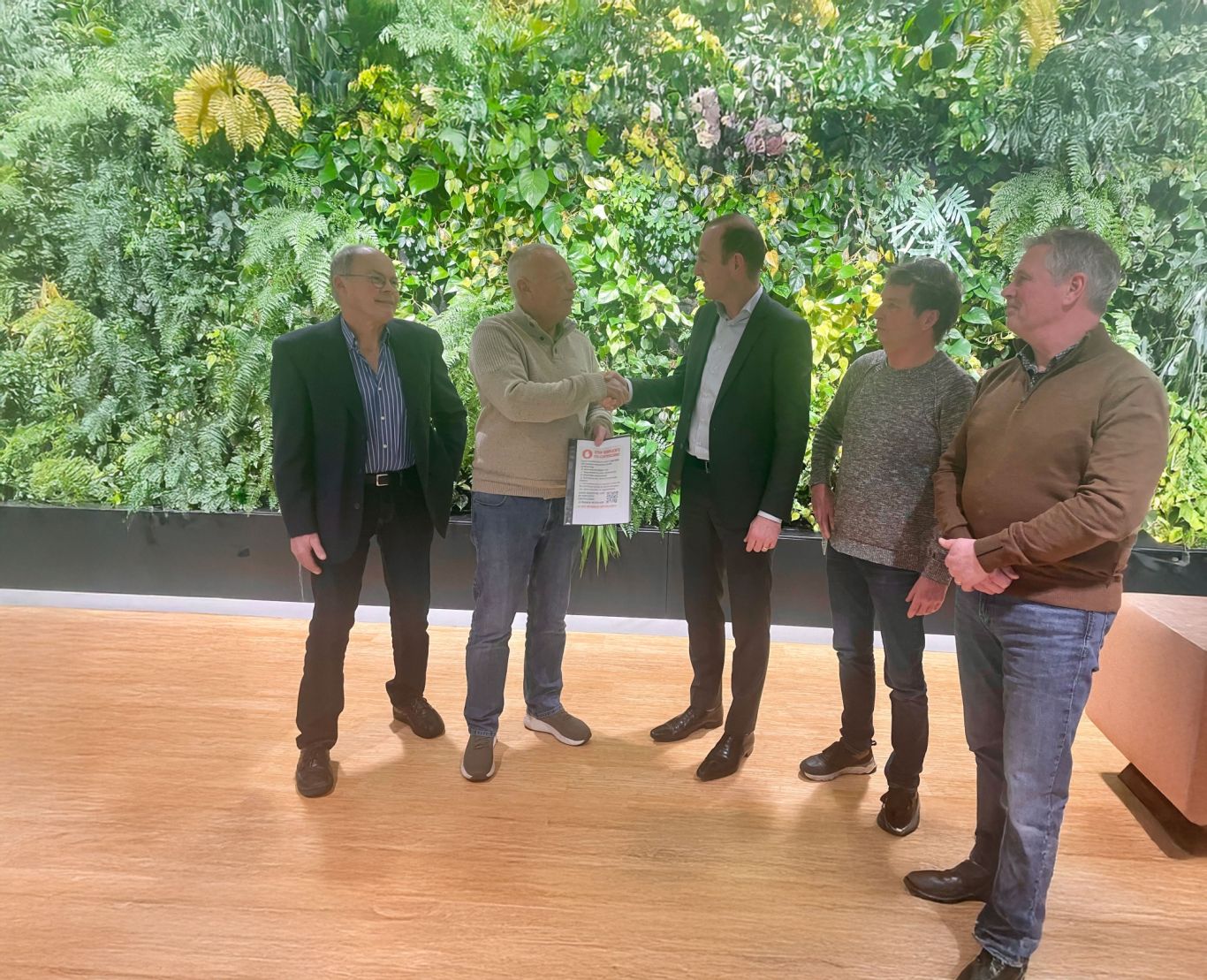
Initiators submit objections to mandatory certification according to FSI requirements to the Royal FloraHolland executive board
January 9, 2026