Marcel van der Lugt looks back on international member sessions: ‘Strong sense of cooperation in Kenya and Ethiopia’
December 12, 2025
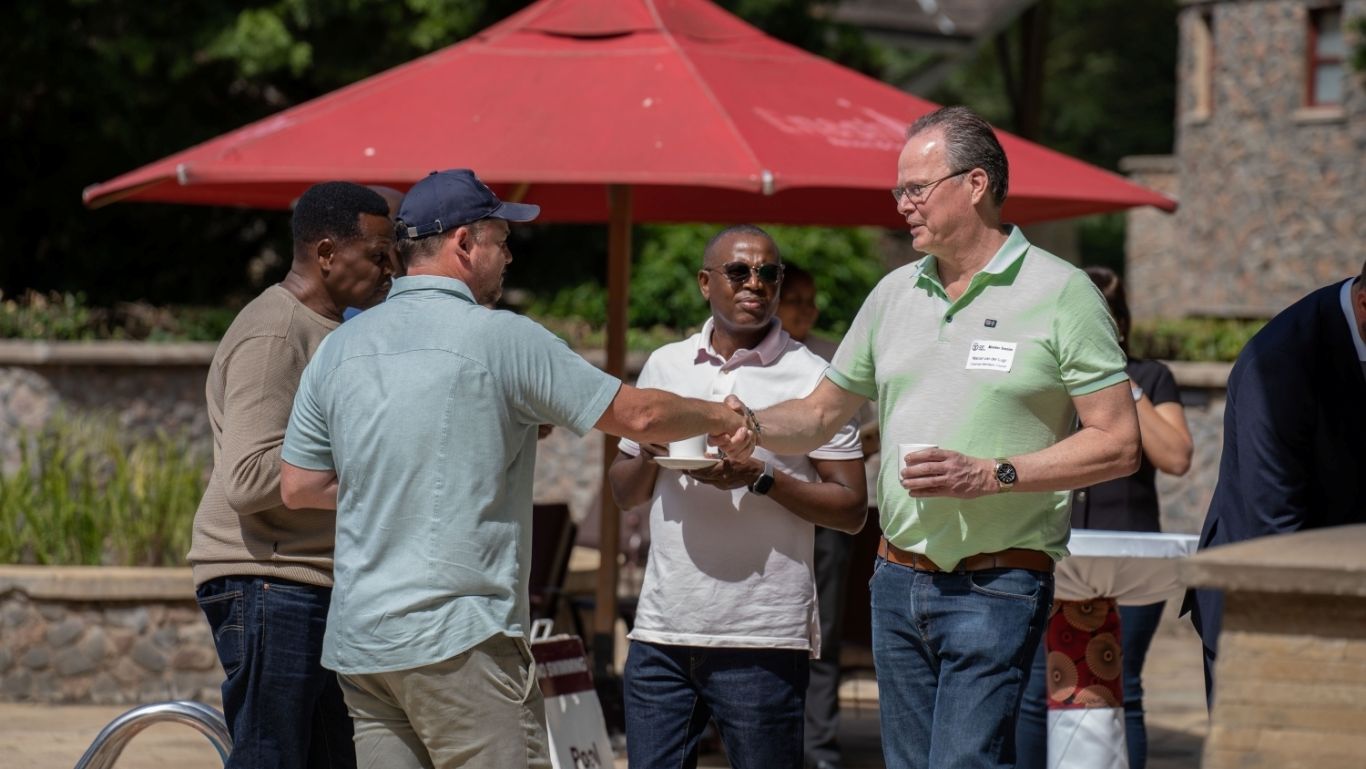
From November 17 to 21, 2025, member sessions were held in Kenya and Ethiopia. Member Council Chairman Marcel van der Lugt was present and looks back on the event with a positive feeling.
The international member sessions in Kenya and Ethiopia are held every six months, just like the national meetings. For Marcel, as Chairman of the Members' Council, it was his first visit to the three member sessions in Kenya and Ethiopia. He was accompanied by Royal FloraHolland representatives including CEO a.i. David van Mechelen, Martin de Ruiter (Chief Buyer Partnership Development & International) and Jolanda Heistek (Manager Cooperative Affairs).
Greater mutual understanding
“Strengthening international cooperation is a priority for me. No matter how you look at it, if we want to be a strong cooperative that is the global hub for floriculture, we also need international members,” says Marcel. ‘The African members of the Members' Council come to the Netherlands six times a year for meetings. They also join committee meetings online. This ensures regular contact with other Members' Council members, which is important for maintaining connections. In turn, our visits to Kenya and Ethiopia with a broad delegation promote mutual understanding.’
Strong sense of cooperation
Just like the Dutch members, the African members were updated on the results for 2025 and the rates for 2026. Mutual cooperation and sustainability were also discussed. What struck Marcel? “The great commitment to Royal FloraHolland,” he says. "I sensed an extremely strong sense of cooperation, in line with the ‘Together we are strong’ campaign. The members I spoke to there are proud to be part of Royal FloraHolland. And they contributed ideas at a strategic level. For example, we told them about the investments in our buildings in the Netherlands. I thought: that's a long way from where I am. But they were very interested and accepted the investments because they are important for the cooperative as a whole."
International opportunities
During the sessions, the members raised the issue of air freight capacity, among other things. ‘Air freight is the biggest expense for growers in Kenya and Ethiopia,’ says Marcel. ‘As a result, some growers are hesitant to do business with Europe. The Middle East and Asia are becoming increasingly interesting markets for them. There are opportunities for our cooperative to support them in this. If we do so, we will increase our added value. And it will also strengthen the mutual connection."
Dutch prejudices
Marcel advocates for greater understanding between national and international members. "In the Netherlands, there are quite a few prejudices about African growers. To put it bluntly: air freight is bad for the environment, workers are exploited, and they spray a lot of chemical crop protection products. I have seen with my own eyes what is being done in terms of sustainability. That is a lot. Yes, in Kenya and Ethiopia, the government allows more crop protection products than in the Netherlands. This is also because different products are sometimes needed in Africa, as it is warmer there and different pests occur. The growers themselves want good and safe working conditions for their staff, and the products are only used where necessary. Where organic methods are possible, they are used. In addition, European retail customers, the Kenya Flower Council, and EHPEA have strict requirements. Those who do not comply cannot do business with European customers. They are happy to comply, because floriculture is an important lifeline that creates a lot of employment.
Sustainability
According to Marcel, it is also good that we as a cooperative take a critical look at how we can better support international processes. And in doing so, make the chain more efficient. ‘In Africa, for example, they look with some surprise at how we handle packaging materials. They deliver flowers in boxes. We take them out of the box here, put them in a bucket, and then put them back in another box. Can't that be done more efficiently, was the question. And as far as air freight is concerned, on balance, products from Africa don't even emit that much more. Solar energy is used extensively; some nurseries are completely self-sufficient. Whereas here we often still use gas for heating. Water consumption is also not as bad as we think; in this part of Africa, it rains more often than we think and the water is collected and used later. To make really good statements about this, we need to be able to provide insight into the footprint per product."
We do it together
‘So we need to respect each other and really work together. We need each other if we want to maintain a strong international position,’ concludes Marcel. ‘This is a task for Royal FloraHolland and for me as chair of the Members' Council. We can explain even better the added value of our international cooperative with international members. This article is an example of that. And I am always open to discussing this with members.’
-
Did you find this interesting?
Then share this article
-
Related articles