Crop protection in the Netherlands and Africa: how does it work in practice?
August 27, 2025
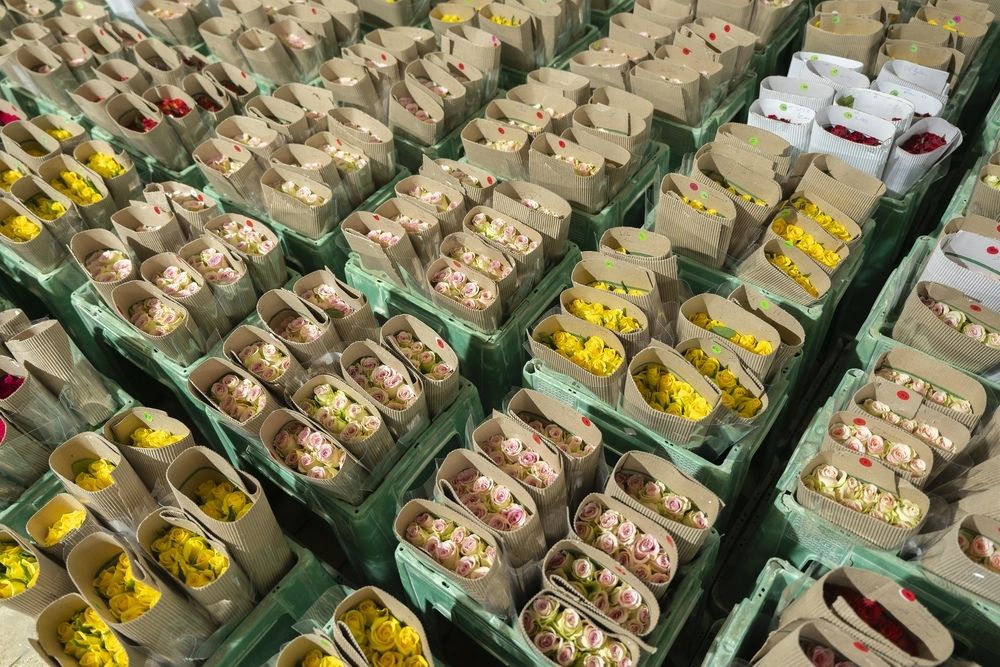
Growers from all over the world want to supply top-quality flowers and plants—free of damage, disease, or pests, and with a long vase life. To protect their products, they follow an IPM plan: Integrated Pest Management. Chemical pesticides are a last resort and are used only when absolutely necessary. Yet much remains unclear on this topic. The use of crop protection products is under close scrutiny. Facts, myths, and opinions often get mixed up in the public debate. Globally, growers are taking steps to reduce their use (even further). They are phasing out the most environmentally harmful active ingredients and seeking more sustainable alternatives. In this article, we explain the current state of (chemical) crop protection within the European Union and (parts of) Africa.
When and how do growers use crop protection?
Crop protection products are used to protect crops from diseases and pests. In greenhouses, growers primarily use natural enemies to prevent pests. These can be insects, such as parasitic wasps and predatory mites, but also microorganisms such as bacteria and fungi. In greenhouses, insects are used most frequently, but bacteria and fungi are also widely employed. In open-field cultivation—for example, with bulbous plants or perennials—bacteria and fungi are primarily used as biological control agents, because beneficial insects can easily be blown away or fly off in the open air. Or because they are ineffective due to rain, cold, or heat.
Growers operate according to an IPM (Integrated Pest Management) plan. This approach prevents and controls pests in a less harmful and more environmentally friendly way. The use of chemical crop protection products is not the first step here, as was the case in the past, but rather a last resort. Only when biological methods prove insufficient is a chemical agent used locally. The sector is actively working on green alternatives that are just as effective and place less strain on people and the environment. Partly as a result of this, a sharp decline in the use of crop protection products is evident.
(Source: CBS and MPS)
An IPM plan teaches growers to understand the life cycle of a pest and to focus on preventive measures, such as hygiene and the use of natural enemies. Afterward, measures can be implemented to keep the pest under control. This process consists of the following four steps:
- Prevention: preventing pests.
- Monitoring: Regular monitoring of pest populations to prevent outbreaks.
- Control: First, non-chemical methods (biological, mechanical—including traps), and only then chemical methods.
- Evaluation: The approach is evaluated and improved where necessary.
Working according to IPM is a European requirement. Every grower certified according to the requirements of the FSI (Floriculture Sustainability Initiative) also works with IPM. In Kenya (over 88%), Ethiopia (91%), and the Netherlands (approximately 85%), the vast majority of revenue meets the FSI requirements.
What global principles apply to using crop protection?
The basic principle is the same everywhere in the world: a product must be effective and safe for humans, animals, and the environment. Which active ingredients are needed for a particular crop depends on several factors, such as climate, cultivation systems, and disease and pest pressure. That is why the approval systems for crop protection products differ between Europe and Africa. Africa faces different diseases and pests than Europe. There are also differences between the Netherlands and Southern Europe. That is why the local (national) government ultimately determines which crop protection products are approved. Local governments also bear ultimate responsibility for enforcement. Growers must comply with local laws, regardless of where the flowers will eventually be sold.
The regulatory landscape surrounding crop protection products is constantly evolving, based on the latest scientific insights. For example, the Kenyan government is increasingly aligning its legislation on crop protection products in horticulture with EU legislation. FSI has also launched an initiative to bring the approved active ingredients in various countries into greater harmony for the floriculture sector. These reforms focus on phasing out the active ingredients that have the greatest environmental impact and on better alignment with international standards. Growers and Royal FloraHolland are closely monitoring this process.
Source: CTGB, PCPB, EAA
How does the crop protection approval system work?
Both the European Union and Africa have formal and rigorous evaluation processes for the approval of crop protection products. However, the approval system varies by country or region. This makes sense, since factors such as climate and the pressure from diseases and pests differ from country to country and region to region. Below, you can read about how the approval system works in the Netherlands, the European Union, Kenya, and Ethiopia.
The Netherlands
In the Netherlands, the Board for the Authorization of Crop Protection Products and Biocides (Ctgb) determines which crop protection products can be safely used on flowers and plants. In addition, various parties, including Royal FloraHolland, are working on a plant protection agreement. Through this, we are building a future-proof plant cultivation sector with a lower environmental impact and sufficient prospects and clarity for growers. We are doing this proactively, in anticipation of any potential government legislation.
European Union
Requests submitted by manufacturers of active ingredients in crop protection products are assessed at the European level by the European Food Safety Authority (EFSA). If the active ingredients are safe for humans, animals, and the environment, they may be used in a product for specific applications. Authorization and use are determined by each member state of the European Union. In the Netherlands, this is the Ctgb. Other European countries have similar agencies. Within the EU, a so-called “zonal approach” is used. Under this approach, countries in similar climate zones can agree on joint authorizations. In addition, member states always have the right to impose additional national requirements, for example, for the sake of local environmental protection.
Kenya
In Kenya, authorization is handled by the Pest Control Products Board (PCPB). Only products listed on the authorization list may be used. Growers hold certificates from the FSI basket or standards that include international certification schemes, such as KFC (Kenya Flower Council), GLOBALG.A.P., and MPS (Environmental Program for Floriculture). This ensures transparency regarding production methods, which are comparable to those used in the Netherlands. Partly due to certification and stricter customer requirements (for example, from European retailers), there is greater oversight of the use of crop protection products. Substances that are banned in the EU must not be present in flowers exported to Europe. Any use of unapproved active ingredients results in the immediate revocation of the certificate. In practice, this often means that growers in Kenya operate in accordance with European regulations.
Ethiopia
In Ethiopia, the registration of crop protection products is regulated by the Plant Health Regulatory Directorate (PHRD). This authority is part of the Ethiopian Ministry of Agriculture. Here, too, growers are permitted to use only approved products. Growers hold certifications from the FSI basket or standards that include international certification schemes, such as EHPEA, GLOBALG.A.P., and MPS. Customers, such as supermarket chains from the EU, set requirements regarding the use of crop protection products.
The use of substances on the MPS blacklist and substances that are not authorized in the country of production results in the revocation of the certificate. In practice, this often means that growers in Ethiopia operate in accordance with European regulations.
What has been achieved already in relation to the use of crop protection for the floriculture?
Crop protection products remain important for protecting crops from diseases or pests and thus bringing high-quality products to market. The floriculture sector is making significant strides toward more environmentally friendly cultivation. This is evident, among other things, from the following results among MPS participants (source: MPS):
- Globally, the use of crop protection products in the floriculture sector has decreased by 35% per hectare since 2015.
- Figures show that the use of the most environmentally harmful (chemical) crop protection products has decreased by as much as 78% worldwide since 2015.
- Dutch potted plant growers have reduced their use of the most environmentally harmful products by 96% since 2015. For cut flowers, the reduction is 88%.
- Kenyan growers have reduced their use of the most environmentally harmful products by as much as 58% since 2019.
- Ethiopian growers have seen a 56% decrease in the use of the most environmentally harmful products since 2019.
- A number of environmental certifications include, as standard, an independent residue analysis that verifies whether the reported data matches the data from the leaf analysis. In addition, there are trade organizations that also commission analyses of the products they market.
What can we conclude in terms of reducing environmental impact?
Growers around the world are actively committed to keeping their products healthy and safe and to reducing their environmental impact. They do so with a strong focus on safety (including for employees) and maintaining a clean environment. Regulations have long been in place in the sector, both domestically and internationally, requiring employees who work intensively with flowers to wear protective clothing.
The use of chemical products is declining. An increasing number of crop protection products of natural origin are becoming available, while existing manufacturers and new producers are working rapidly to bring more of these products to market. The EU is working to expedite the evaluation of the many “green” products that are still in the approval process.
The growing cooperation between countries in Europe and Africa is encouraging.
The assessments of crop protection products are becoming increasingly coordinated, and the approval systems are being harmonized more and more. By producing more transparently, innovating, and collaborating, growers worldwide are taking steps toward a sustainable future.
How do growers view this topic?
Read the growers' experiences here:
- Ed Stofbergen of Stofbergen Plant Company in Bergschenhoek grows Bromeliads. These are supplied to retailers, garden centers, and florists via exporters.
- Nancy Kurgat of Sian Flowers in Kenya produces roses and summer flowers, among other things. Sian Flowers sells its products worldwide.
- Rosaline Zuurbier of Zuurbier & Co has been producing high-quality cut roses for over 50 years. Since 2001, the roses have been grown at the Bilashaka Flowers nursery in Kenya.
See this article for the latest figures on the use of crop protection products.
-
Did you find this interesting?
Then share this article
-
Related articles